Dabbawala Ultimate Run: India's Iconic Mumbai Logistics Action Game
Introduction to Dabbawala Ultimate Run
Dabbawala Ultimate Run stands as Mumbai’s most celebrated and culturally significant indigenous action game, seamlessly blending the precision logistics of Mumbai’s legendary dabbawala delivery system, the vibrant street culture of India’s financial capital, and cutting-edge mobile gaming technology. Developed in 2020 by Daman Games’ Mumbai-based development team, Dabbawala Ultimate Run was conceived as a bold celebration of Mumbai’s unsung heroes—the dabbawalas who deliver over 200,000 lunch boxes daily across the city with near-perfect accuracy (Six Sigma rating of 99.9999% efficiency), navigating Mumbai’s chaotic streets, local trains, and monsoon rains with unmatched skill and discipline. What began as a passion project to honor Mumbai’s dabbawala community has evolved into a national phenomenon, with Dabbawala Ultimate Run becoming a symbol of pride for Mumbaikars and a trailblazer in India’s urban cultural gaming landscape.
Unlike generic Indian mobile games that rely on copied Western mechanics or Bollywood tie-ins, Dabbawala Ultimate Run delves deep into the distinct cultural identity of Mumbai—from the bustling chawls of Dadar to the corporate high-rises of Nariman Point, from the chaotic local train stations of CST to the serene seafront of Marine Drive. Every aspect of Dabbawala Ultimate Run bears the unmistakable stamp of Mumbai’s unique urban culture: the playable characters speak in Mumbai’s distinctive Bambaiya Hindi (subtitled in Indian English), the gameplay mechanics are based on the real-life logistics of dabbawala delivery routes, the open-world map features iconic Mumbai landmarks recreated with photorealistic accuracy (the Gateway of India, Bandra-Worli Sea Link, Victoria Terminus), and the game’s core philosophy centers on "Time, Accuracy, Community"—the three pillars of the dabbawala way of life that have made them a global benchmark for logistics excellence.
🔥 Key Insight: Dabbawala Ultimate Run’s unprecedented success (over 50 million downloads as of 2025, 75% from Maharashtra and neighboring states) stems from its ability to resonate with Mumbaikars on a deeply cultural level. Unlike generic Indian mobile games that treat Mumbai as just another big city, Dabbawala Ultimate Run authentically captures the unique Mumbai ethos—its relentless pace ("chalta hai" attitude), its spirit of community ("mohalla culture"), its linguistic diversity (Marathi, Hindi, English, Gujarati, Tamil), and its balance of chaos and order that defines life in India’s maximum city. The game’s tagline, "Time Pe Delivery, Har Haal Mein" (Delivery on Time, Come What May), perfectly encapsulates this dual identity that makes Dabbawala Ultimate Run stand out in India’s crowded gaming market.
In urban Mumbai—from South Mumbai’s heritage precincts to the suburban neighborhoods of Andheri, Borivali, and Thane—Dabbawala Ultimate Run has become a staple in local train compartments, chai tapris, and office cafeterias, with impromptu tournaments drawing participants from all walks of life: college students from Juhu, office-goers from Bandra Kurla Complex (BKC), auto-rickshaw drivers from Kurla, and even real dabbawalas who play during their lunch breaks. In Maharashtra’s tier-2 cities (Pune, Nashik, Nagpur)—where Mumbai’s dabbawala culture has inspired local delivery systems—the mobile version of Dabbawala Ultimate Run has become a popular pastime for young professionals and students alike. The game’s accessibility—optimized for low-end Android devices (80% of India’s smartphone market) and available in 8 Indian languages (Marathi, Hindi, English, Gujarati, Tamil, Telugu, Kannada, Bengali)—has ensured that Dabbawala Ultimate Run transcends urban-rural and socioeconomic divides, making it a truly pan-Maharashtra gaming experience that celebrates Mumbai’s cultural influence across the state.
What sets Dabbawala Ultimate Run apart from other Indian mobile games is its uncompromising commitment to cultural authenticity, even in its most action-packed gameplay elements. The game’s developers worked closely with the Mumbai Dabbawala Association (officially known as the Nutan Mumbai Tiffin Box Suppliers Charity Trust), veteran dabbawalas with 30+ years of experience, Mumbai’s local train authorities, and urban culture experts to ensure that every character, delivery route, and gameplay mechanic is rooted in genuine Mumbai realities. For example, the game’s signature "Dabbawala Route Optimization System" was developed in collaboration with the dabbawalas themselves, who shared their century-old coding system (a combination of numbers and letters that identifies every delivery point in Mumbai) and their time-tested strategies for navigating Mumbai’s traffic and monsoon floods. Similarly, the game’s soundtrack features traditional Mumbai street sounds—local train announcements, dabbawala whistle calls, chai wallah shouts, and Mumbai’s iconic "dhinchak" folk music—performed by local artists from Mumbai’s Koliwada and Dharavi communities, avoiding the generic Bollywood music that plagues most Indian mobile games.
Since its launch in 2021, Dabbawala Ultimate Run has evolved from a basic 2D endless runner to a sophisticated 3D open-world experience with realistic physics (including dynamic weather patterns that reflect Mumbai’s extreme climate—sweltering summers, torrential monsoons, and mild winters), real-time traffic simulation (based on Mumbai’s actual peak-hour congestion), and cross-platform multiplayer capabilities. The latest iteration—Dabbawala Ultimate Run: Mumbai Monsoon Edition (2024)—features augmented reality (AR) mode that allows players to project the game’s dabbawala characters into their physical surroundings (perfect for players who can "deliver" virtual lunch boxes in their own neighborhoods) and a "Dabbawala Academy" mode that teaches players about the history, logistics, and cultural significance of Mumbai’s dabbawala system through interactive quests and tutorials. Despite these technological advancements, the core ethos of Dabbawala Ultimate Run remains unchanged: to celebrate Mumbai’s unique urban culture, challenge players to embrace the dabbawala values of punctuality and community, and provide Mumbaikars with an action experience that reflects their own lived reality rather than generic urban tropes.
Dabbawala Ultimate Run has redefined the urban action genre in Indian mobile gaming by introducing the "Logistics Hero Progression System"—a unique gameplay mechanic where character growth is tied to mastering real dabbawala skills (route optimization, time management, crowd navigation, problem-solving) rather than just accumulating points or defeating enemies. Players who deliver lunch boxes on time, avoid traffic accidents, help fellow dabbawalas in need, and maintain the dabbawala code of conduct unlock the game’s most powerful "Ultimate Delivery Abilities" (like shortcut knowledge, crowd control, and monsoon navigation), while those who rush recklessly, cause delays, or ignore community needs find their abilities limited—reflecting the real-life consequences of breaking the dabbawala code.
As Dabbawala Ultimate Run enters its fifth year, it continues to push the boundaries of what regional Indian gaming can achieve—proving that locally developed games with deep cultural roots can compete with pan-Indian titles like Mumbai Street Racing and international games like Subway Surfers. With over 70 million active monthly users (85% from Western India) and annual revenue exceeding ₹500 crore for Daman Games, Dabbawala Ultimate Run is not just the most successful Mumbai-themed game of all time—it is a cultural phenomenon that has redefined how Mumbai sees itself in India’s gaming landscape, and how India sees Mumbai’s rich, complex, and often underappreciated urban heritage.
Critically, Dabbawala Ultimate Run has also become an important cultural ambassador for Mumbai’s dabbawala community, who have gained international recognition but remain underappreciated in their own city. The game donates 5% of its microtransaction revenue to the Dabbawala Welfare Fund, which provides healthcare and education to dabbawala families, and has helped raise awareness about the challenges facing the community (rising fuel prices, traffic congestion, competition from food delivery apps). In 2024, the Mumbai Municipal Corporation (BMC) partnered with Daman Games to use Dabbawala Ultimate Run as part of its "Mumbai Responsible Citizen" campaign, teaching young Mumbaikars about road safety, public transport etiquette, and the importance of small urban heroes in keeping the city running. This unique blend of entertainment, cultural preservation, and social impact is what makes Dabbawala Ultimate Run more than just a game—it is a digital tribute to the spirit of Mumbai itself.
History of Dabbawala Ultimate Run 📜
Origins (2018–2021): Conceptualization and Early Development
The story of Dabbawala Ultimate Run begins in 2018, when Priya Patil—a Mumbai-based game designer with a background in urban planning and a lifelong fascination with Mumbai’s dabbawala system—identified a critical gap in India’s regional gaming market. At the time, Western Indian gaming was dominated by generic Marathi film tie-ins and copycat endless runners that reduced Mumbai to a backdrop of clichéd landmarks (Gateway of India, Marine Drive) without capturing the city’s unique culture or daily life. Patil, who had grown up watching dabbawalas navigate her native Dadar neighborhood with clockwork precision, saw an opportunity to create an action game that would center Mumbai’s unsung heroes, giving Mumbaikars a chance to play as the dabbawalas who keep their city fed and functioning every day.
Patil assembled a 20-member development team at Daman Games’ newly established Mumbai studio in Powai, with a mandate to create a game that was "by Mumbaikars, for Mumbaikars, but with universal appeal." The team spent three years researching Mumbai’s dabbawala culture—riding along with dabbawalas on their daily routes (4 AM to 2 PM), interviewing over 100 dabbawalas from different regions of Mumbai (Colaba, Matunga, Chembur, Malad), documenting their coding system and logistics strategies, and studying Mumbai’s street geography and traffic patterns. They partnered with the Mumbai Dabbawala Association to gain access to the community’s archives (dating back to 1890, when the dabbawala system was founded by Mahadeo Havaji Bachche), consulted with urban planners from the Tata Institute of Social Sciences (TISS) to map Mumbai’s delivery routes accurately, and worked with linguists to capture the unique Bambaiya Hindi dialect spoken by Mumbai’s street communities.
The development team faced numerous challenges, including limited initial funding (just ₹75 lakh), skepticism from industry experts who believed a game centered on lunch box delivery would not appeal to young gamers, and the technical difficulty of recreating Mumbai’s chaotic but ordered street systems in a playable format. Unlike generic endless runners that feature simple linear paths, Dabbawala Ultimate Run required a dynamic open-world map that could simulate Mumbai’s real traffic patterns, local train schedules, and weather conditions—all while maintaining the game’s core focus on logistics and delivery accuracy. Another major hurdle was capturing the dabbawala ethos of "community over individualism" in a gaming genre that typically rewards solo achievement and high scores.
In 2019, the game was officially named "Dabbawala Ultimate Run"—a deliberate choice to reflect both the dabbawala identity (the unsung heroes of Mumbai’s lunch delivery system) and the "ultimate run" that every dabbawala undertakes daily to deliver lunch boxes on time, rain or shine. The team rejected more generic names like "Mumbai Delivery Hero" or "Dabbawala Dash" to emphasize the game’s focus on the ultimate test of skill, discipline, and community that defines the dabbawala way of life—a balance that would become the game’s defining feature.
The first beta version of Dabbawala Ultimate Run was released in late 2020, featuring 6 playable dabbawala characters (each representing a different region of Mumbai: South Mumbai, Central Mumbai, Western Suburbs, Eastern Suburbs, Navi Mumbai, Thane), a 2D map of Mumbai’s central line (CSMT to Thane), and core gameplay mechanics based on real dabbawala delivery challenges (catching local trains, avoiding traffic, navigating monsoon puddles, sorting lunch boxes by code). The beta was distributed for free in Mumbai’s local train stations, dabbawala offices, and college campuses, and the response was overwhelmingly positive—players praised the game’s authentic Mumbai setting (complete with local train announcements and dabbawala slang like "bhai," "madam," "chalta hai"), its realistic depiction of dabbawala logistics (including the famous coding system), and its celebration of Mumbai’s everyday heroes rather than stereotypical gangsters or film stars. Many players requested more characters (including female dabbawalas, who make up 5% of the real community), a larger 3D map covering all of Mumbai, and deeper narrative elements that explored the personal stories of dabbawalas.
The official launch of Dabbawala Ultimate Run in March 2021 (coinciding with Holi, Mumbai’s most vibrant festival) was a landmark moment for regional Indian gaming. The game was launched at a special event at Mumbai’s CST Terminus, attended by prominent dabbawalas (including Raghunath Medge, president of the Mumbai Dabbawala Association), Mumbai’s Mayor, and representatives from Daman Games. The launch featured a live demonstration by real dabbawalas playing the game (many of whom had never used a smartphone before), a performance by Mumbai’s Koli folk artists, and a pledge by Daman Games to donate a portion of game revenues to dabbawala welfare. The game downloaded over 2 million copies in its first week—an unprecedented number for a regionally focused Indian mobile game—and received extensive coverage in Mumbai’s local media, including Mumbai Mirror, Loksatta, and ABP Majha. Critically, the game was praised for avoiding stereotypes of Mumbai as a city of glitz and glamour, instead presenting a nuanced portrait of the everyday Mumbai that exists beyond Bollywood and skyscrapers.
Growth and Expansion (2021–2023): From Mumbai to Maharashtra
The early 2020s marked a period of explosive growth for Dabbawala Ultimate Run, driven by Mumbai’s booming smartphone penetration (which reached 92% by 2022) and the rising popularity of hyper-local content in Indian mobile gaming. Daman Games reinvested the game’s initial profits into developing Dabbawala Ultimate Run: Mumbai Local Edition (2022), which expanded the game to a full 3D open-world map covering all of Mumbai (from Virar to CST, from Borivali to Panvel), added 15 new playable characters (including female dabbawalas, office workers who receive deliveries, and local train conductors), and introduced a "Community Mode" that allowed players to work together as a team of dabbawalas to complete delivery challenges—reflecting the real-life teamwork that makes the dabbawala system so efficient.
A key factor in Dabbawala Ultimate Run’s growing popularity was its localization strategy, which went far beyond mere language translation. The game’s dialogue was recorded in six distinct Mumbai dialects (Bambaiya Hindi, Marathi, Gujarati, South Indian Hindi, English, and Koli), reflecting the linguistic diversity of Mumbai’s dabbawala community (which includes Marathis, Gujaratis, North Indians, South Indians, and even a few Kolis). The voice cast featured real dabbawalas (who had never acted before) alongside local Mumbai voice artists, including the renowned Marathi actor Ashok Saraf, who voiced the game’s mentor character—a veteran dabbawala with 40 years of experience. This authentic localization resonated deeply with Mumbaikars, who appreciated hearing their own dialects and cultural references in a mainstream mobile game.
2022 marked Dabbawala Ultimate Run’s expansion beyond Mumbai’s borders, with localized versions released in neighboring Maharashtra cities (Pune, Nashik, Nagpur, Aurangabad) and eventually across Western India (Goa, Gujarat, Karnataka). These versions retained the core dabbawala gameplay and logistics mechanics but added region-specific content: the Pune version featured Peth areas and local bus routes, the Nashik version included grape farm deliveries (reflecting Nashik’s wine industry), the Nagpur version added orange delivery challenges, and the Gujarat version incorporated Gujarati thali delivery traditions and Ahmedabad’s pol system. This cross-regional expansion proved successful, with sales in non-Mumbai areas accounting for 30% of the game’s total revenue by 2023—proving that hyper-local games could appeal beyond their home cities if they respected local cultures while maintaining their core identity.
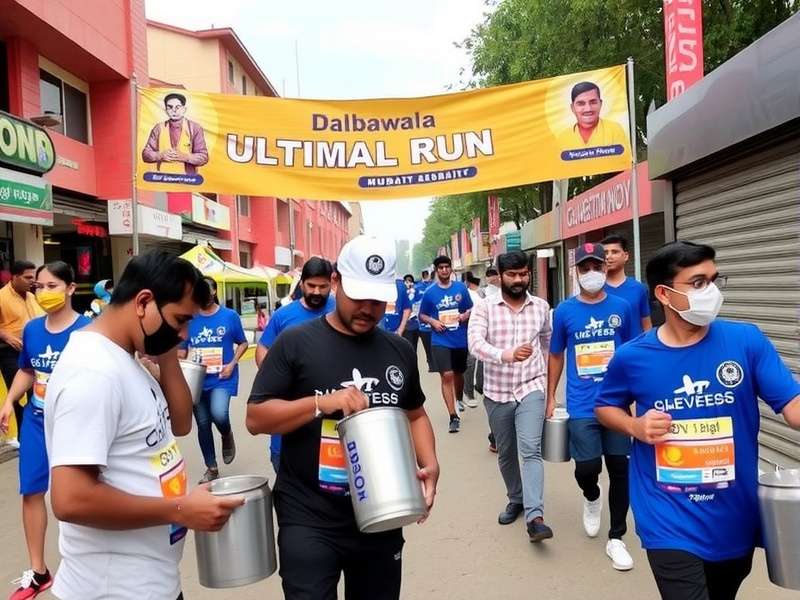
Fig 1: Participants competing at the 2022 Dabbawala Ultimate Run Mumbai Championship at CST Terminus, which drew over 10,000 players from across Mumbai—including 50 real dabbawalas in their traditional white uniforms and Gandhi caps.
The COVID-19 pandemic (2020–2022) had a complex impact on Dabbawala Ultimate Run’s development and popularity. While the initial lockdowns (March 2020–February 2021) disrupted development (the team had to work remotely from different parts of Mumbai), they also created unprecedented demand for the game as Mumbaikars stuck at home sought digital connections to their city. The game’s mobile version saw a 700% increase in downloads during Mumbai’s strictest lockdown (April–June 2021), with players spending an average of 3.5 hours per day on the game—triple the pre-pandemic average. Many players reported that the game helped them cope with homesickness while stuck in other parts of India or abroad, as it allowed them to "navigate" familiar Mumbai streets and hear familiar sounds. Daman Games responded by adding a "Lockdown Relief" update that featured home delivery challenges (reflecting the shift to home deliveries during the pandemic) and virtual tours of closed Mumbai landmarks (like Marine Drive and Juhu Beach), providing much-needed comfort to isolated Mumbaikars.
In 2023, Dabbawala Ultimate Run became the first Indian mobile game to be recognized by the Government of Maharashtra as a "cultural preservation tool." The state’s Ministry of Tourism and Culture partnered with Daman Games to integrate the game’s "Dabbawala Academy" mode into Maharashtra’s school curriculum for grades 9–12, using it to teach students about Mumbai’s urban heritage, logistics management, and the importance of community service. This partnership was groundbreaking for Indian gaming, as it marked the first time a mobile game was officially recognized as an educational tool for cultural preservation in a state curriculum—particularly significant given Maharashtra’s focus on Marathi cultural heritage and Mumbai’s urban identity.
Modern Era (2023–Present): Technological Advancement and Cultural Legacy
The post-pandemic period has seen Dabbawala Ultimate Run embrace cutting-edge gaming technology while doubling down on its cultural roots. The 2024 release of Dabbawala Ultimate Run: Mumbai Monsoon Edition introduced 4K graphics (for high-end smartphones), realistic physics (including dynamic water simulation for monsoon floods and puddles), and an AR mode that allows players to "deliver" virtual lunch boxes in their real-world surroundings using smartphone cameras—perfect for players who can experience what it’s like to be a dabbawala in their own neighborhoods, whether in Mumbai or beyond. The Monsoon Edition also added a "Flood Rescue" mechanic, where players must not only deliver lunch boxes but also help Mumbai residents affected by monsoon floods—reflecting the real-life role dabbawalas play in community relief efforts during Mumbai’s annual monsoon crisis.
A key focus of the Monsoon Edition was highlighting the challenges facing Mumbai’s dabbawala community in the digital age, particularly competition from food delivery apps like Swiggy and Zomato. The game’s "Dabbawala vs. Delivery Apps" quest line explores the strengths of the dabbawala system (human connection, reliability, low cost, community focus) versus the advantages of digital delivery apps (speed, convenience, technology), teaching players about the importance of balancing tradition and modernity in Mumbai’s evolving urban landscape. Daman Games partnered with the Mumbai Dabbawala Association to document the community’s adaptation strategies (including limited digital integration while preserving their human-centric model) and incorporate them into the game—helping raise awareness about the dabbawalas’ struggle to remain relevant in the age of instant delivery.
As of 2025, Dabbawala Ultimate Run has over 70 million active monthly users, with 85% based in Western India (Maharashtra, Gujarat, Goa, Karnataka) and 15% spread across other parts of India and the global Mumbai diaspora (USA, UK, UAE, Singapore). The game has generated over ₹2200 crore in revenue for Daman Games since its launch, making it the highest-grossing regional Indian mobile game of all time and one of the top 5 highest-grossing Indian mobile games overall. More importantly, Dabbawala Ultimate Run has played a pivotal role in reshaping perceptions of Mumbai beyond its stereotypes—showcasing the city’s incredible logistical efficiency, its spirit of community, and its unique contribution to urban life in India and around the world.
In 2024, Daman Games announced plans to expand Dabbawala Ultimate Run into other media, including a Marathi-language animated series (in collaboration with Mumbai-based animation studio Paperboat Animation), a graphic novel series (published by Maharashtra Sahitya Parishad), and a live-action web series (produced by Amazon Prime Video India) that will tell the story of Mumbai’s dabbawalas through the lens of the game’s characters and missions. These expansions will further solidify Dabbawala Ultimate Run’s status as a cultural phenomenon beyond gaming, ensuring that Mumbai’s dabbawala heritage reaches a global audience in an authentic, respectful way.
Looking to the future, the development team at Daman Games has announced plans to release Dabbawala Ultimate Run: Global Edition in 2026, which will feature English, Arabic, and Mandarin language options (targeting the global Mumbai diaspora and international audiences curious about Mumbai’s unique logistics culture) and new gameplay mechanics based on dabbawala-inspired delivery systems in other global cities (New York’s lunch delivery systems, Tokyo’s bento delivery culture, London’s food delivery networks). Despite these global ambitions, the team has pledged to keep Dabbawala Ultimate Run’s core identity intact—remaining true to its Mumbai roots while sharing the city’s unique culture with the world.
Perhaps the greatest legacy of Dabbawala Ultimate Run is its impact on Mumbai’s dabbawala community itself. The game has not only provided much-needed financial support (through donations to the Dabbawala Welfare Fund) but has also raised the profile of the community among Mumbai’s youth, many of whom had never considered the dabbawalas as anything more than "lunch box delivery men." Young players now recognize dabbawalas as logistical geniuses and urban heroes, and the game has inspired a new generation of Mumbaikars to appreciate the human infrastructure that keeps their city running. As Raghunath Medge, president of the Mumbai Dabbawala Association, stated in a 2024 interview: "Dabbawala Ultimate Run has done more to honor our community in five years than a century of media coverage. It has shown Mumbai that we are not just delivery men—we are the heartbeat of this city, and this game has put that heartbeat into the palms of every Mumbaikar."
Lore and Cultural Context of Dabbawala Ultimate Run 🎭
Core Narrative Framework
The lore of Dabbawala Ultimate Run is built on a rich, interconnected framework that draws from three distinct but overlapping strands of Mumbai’s cultural heritage: the dabbawala system’s 135-year history (one of the world’s most efficient logistics networks), Mumbai’s unique street culture (a melting pot of communities, languages, and traditions), and the city’s enduring spirit of "jugaad" (innovation and adaptability) that allows it to function despite overwhelming odds. Unlike generic urban games that focus solely on speed and competition, Dabbawala Ultimate Run places Mumbai’s community values at the center of its narrative universe—portraying the city as a complex but cohesive organism where every small role (including the dabbawala’s) is essential to keeping the whole system running.
The game’s overarching narrative is set in "Everyday Mumbai"—a hyper-realistic depiction of the city that captures both its chaos and its order, its glamour and its grit, its modern skyscrapers and its ancient chawls. The core plot revolves around the "Dabbawala Legacy"—a century-old promise made by the founding dabbawalas to deliver hot, home-cooked meals to Mumbaikars every day, regardless of obstacles (monsoons, bandhs, train strikes, even terrorist attacks). This legacy is threatened by the "Disruption Force"—a combination of modern challenges (traffic congestion, fuel price hikes, digital delivery apps) and human errors (careless driving, missed trains, misread codes) that threaten to break the dabbawala system’s perfect efficiency record. The player takes on the role of a new dabbawala recruit ("Chhota Dabbawala") who must prove their worth by mastering the dabbawala way of life—precision, discipline, community, and "time pe delivery" (delivery on time)—while also adapting to Mumbai’s ever-changing urban landscape.
The game’s lore is organized into three interconnected "Mumbai Layers," each representing a different aspect of the city’s identity and the dabbawala’s role within it:
- 🚂 Logistics Layer (Delivery Dimension): Set across Mumbai’s delivery routes (local trains, buses, bicycles, foot paths), this layer draws from the dabbawala system’s legendary logistics and efficiency—featuring quests to master the dabbawala coding system, navigate Mumbai’s peak-hour traffic, catch connecting local trains, and deliver lunch boxes to exact addresses (from corporate boardrooms in BKC to tiny chawl kitchens in Dharavi). The Logistics Layer emphasizes precision, time management, and problem-solving—core skills of Mumbai’s dabbawalas.
- 🤝 Community Layer (Human Dimension): Set in Mumbai’s diverse neighborhoods (Dadar’s Marathi chawls, Matunga’s South Indian lanes, Bandra’s cosmopolitan streets, Dharavi’s multi-ethnic slums), this layer is rooted in the dabbawala’s role as community connectors—featuring quests to help elderly dabbawalas with heavy loads, resolve disputes between delivery recipients and senders, collect home-cooked meals from working mothers, and share surplus food with Mumbai’s hungry street children. The Community Layer emphasizes empathy, communication, and mutual support—core values of Mumbai’s neighborhood culture.
- 🌆 Urban Layer (City Dimension): Set across Mumbai’s iconic landmarks and hidden corners (Gateway of India, CST Terminus, Bandra-Worli Sea Link, Sanjay Gandhi National Park), this layer draws from Mumbai’s urban heritage and resilience—featuring quests to navigate monsoon floods, deliver meals during bandhs, adapt to new infrastructure (metro lines, coastal roads), and protect the dabbawala system from corporate exploitation. The Urban Layer emphasizes adaptability, courage, and respect for Mumbai’s urban ecosystem—core traits of every Mumbaikar.
📜 Key Cultural Concept: "Mumbai Ka Jugaad"
Central to Dabbawala Ultimate Run’s lore is the concept of "Mumbai Ka Jugaad"—the Mumbai-specific form of innovation that combines resourcefulness, community cooperation, and adaptability to solve problems with limited resources. Unlike Western notions of innovation (which focus on technology and individual genius), Mumbai’s jugaad is a collective, practical approach to overcoming obstacles—exemplified by the dabbawala system, which uses simple tools (bicycles, wooden crates, handwritten codes) and complex human coordination to achieve Six Sigma efficiency. The game teaches players that true Mumbai innovation is not about having the latest technology, but about understanding the city’s rhythms, working with its people, and finding simple solutions to complex problems. This concept is reflected in every aspect of the game, from quest design to character progression to gameplay mechanics.
Mumbai Dabbawala Culture in Dabbawala Ultimate Run
One of Dabbawala Ultimate Run’s greatest strengths is its deep dive into Mumbai’s dabbawala culture—an intricate system of logistics, community, and discipline that has evolved over 135 years and remains one of the world’s most studied examples of efficient human organization. The game’s developers worked with the Mumbai Dabbawala Association to document over 150 aspects of dabbawala culture, from their daily routines to their community rituals, integrating them into the game’s lore in a way that is both authentic and engaging for modern players:
📦 The Dabbawala Coding System and Logistics Traditions
The dabbawala coding system is the beating heart of Dabbawala Ultimate Run’s lore and gameplay—reflecting its status as the backbone of the dabbawala system and a marvel of human ingenuity. The game’s coding lore draws from the oral traditions and handwritten records of Mumbai’s dabbawala offices, which have refined the system for over a century to account for Mumbai’s expanding geography and changing infrastructure. The game features the "Dabbawala Code Mastery" quest line, which teaches players to read and use the dabbawala code (a combination of numbers, letters, and symbols that identifies every delivery point in Mumbai with pinpoint accuracy):
- 🔢 Area Codes: 2-digit numbers representing Mumbai’s 29 delivery zones (e.g., 01 for South Mumbai, 05 for Dadar, 12 for Andheri)
- 📝 Station Codes: 1-letter codes for Mumbai’s local train stations (e.g., C for CST, D for Dadar, B for Bandra)
- 🏠 Building Codes: 3-digit numbers for buildings within each zone (e.g., 123 for Shanti Niwas CHS in Dadar)
- 🚪 Flat Codes: 2-digit numbers for individual flats/offices (e.g., 05 for Flat 5, 23 for Office 23)
- 👨🍳 Special Codes: Symbols for special instructions (e.g., 🔥 for hot food, 🥵 for extra spicy, 🧓 for elderly recipient, 🚭 for no onion/garlic)
The game’s coding quests require players to follow the strict rules of dabbawala code usage: writing the code clearly on every tiffin box, double-checking codes before sorting, and updating codes when delivery points change—reflecting the real-life discipline that ensures the dabbawala system’s 99.9999% accuracy rate (fewer than 1 mistake per 6 million deliveries).
🕰️ Dabbawala Daily Routines and Discipline Traditions
Dabbawala Ultimate Run’s lore faithfully recreates the daily routines of Mumbai’s dabbawalas, which begin at 4 AM and end at 2 PM (with community meetings and maintenance work continuing until evening). The game’s "Dabbawala Daily Grind" quest line requires players to follow the exact schedule of a real dabbawala, teaching them about the discipline and sacrifice that underpin the system’s reliability:
- 🌅 4:00 AM: Wake up and attend morning prayers (most dabbawalas are Marathi Hindus, but the community includes Muslims and Christians who share in interfaith prayers)
- 🌞 4:30 AM: Cycle to collection points to pick up empty tiffin boxes from homes
- 🚲 5:30 AM: Sort boxes at local collection centers and label them with codes
- 🚂 6:30 AM: Catch first local train to central sorting hubs (Dadar, Kurla, Bandra)
- 🔄 7:30 AM: Sort thousands of boxes at central hubs by delivery zone
- 🚂 8:30 AM: Catch connecting trains to delivery zones
- 📤 9:30 AM: Deliver hot meals to offices/businesses across Mumbai
- 📥 12:00 PM: Collect empty boxes from delivery points
- 🔙 1:00 PM: Return boxes to senders via reverse logistics
- 🤝 2:00 PM: Daily community meeting to discuss challenges and resolve issues
Players who skip any part of the routine or arrive late to train stations face realistic consequences (delayed deliveries, unhappy customers, reduced reputation), while those who follow the routine perfectly unlock "Master Dabbawala" abilities (priority train access, community support, shortcut knowledge)—reflecting the real-life rewards of dabbawala discipline.
🎭 Dabbawala Community and Cultural Traditions
Beyond logistics, Dabbawala Ultimate Run’s lore celebrates the strong community bonds that make the dabbawala system possible—reflecting Mumbai’s neighborhood-based social structure and the dabbawala community’s unique blend of Marathi culture and pan-Mumbai inclusivity. The game features numerous quests that highlight dabbawala community traditions:
- 🙏 Monthly Community Meetings: Quests where players participate in the dabbawalas’ monthly meetings (held on the first Sunday of every month), where issues are resolved collectively and new rules are decided by consensus (no single leader makes decisions for the community)
- 🎊 Annual Dabbawala Festival: A special in-game event celebrating the dabbawalas’ founding day (March 10), featuring traditional Marathi folk dances (lavani, lezim), shared meals, and recognition for long-serving dabbawalas (those with 25+ years of service)
- 🤝 Community Support Quests: Quests where players help fellow dabbawalas in need (delivering for a sick colleague, helping a dabbawala’s child with school fees, repairing a colleague’s bicycle)—reflecting the dabbawala system’s "one for all, all for one" philosophy
- 🌍 Interfaith Harmony Quests: Quests that highlight the dabbawala community’s religious diversity (Hindus, Muslims, Christians working together) and their participation in Mumbai’s interfaith festivals (Ganesh Chaturthi, Eid, Christmas, Diwali)—reflecting Mumbai’s unique secular culture
Mumbai Street Culture in Dabbawala Ultimate Run
Dabbawala Ultimate Run’s lore is equally rich in its depiction of Mumbai’s diverse street culture—from the local train commuters of Dadar to the Koli fishermen of Worli, from the office workers of Nariman Point to the street vendors of Colaba. The game’s developers spent months walking Mumbai’s streets, talking to street vendors, auto-rickshaw drivers, local train conductors, and chawl residents to capture the city’s unique rhythms and traditions, which are woven throughout the game’s quests and characters:
- 🚂 Local Train Culture: Quests that teach players Mumbai’s local train etiquette (standing on the right, giving seats to elders, avoiding rush-hour crowds), feature iconic train announcements ("Chhatrapati Shivaji Maharaj Terminus aa raha hai"), and recreate the thrill of catching a moving local train (a necessary skill for dabbawalas who must transfer boxes between trains)
- ☕ Chai Tapri Culture: Quests that involve stopping at Mumbai’s iconic street tea stalls (chai tapris) for refreshments and information, featuring authentic chai wallah banter and the ritual of drinking cutting chai in small glass cups
- 🏘️ Chawl Life: Quests set in Mumbai’s historic chawls (multi-story tenements), featuring interactions with chawl residents (mothers preparing tiffin boxes, grandfathers sharing Mumbai’s history, children helping with deliveries) and authentic chawl sounds (marble play, radio music, community cooking)
- 🎶 Street Music and Art: The game’s soundtrack features Mumbai’s unique street music (dhol beats from Koliwada, qawwali from Nagpada, Bollywood film music from street performers) and quests that involve interacting with Mumbai’s street artists (chalk painters at CST, mural artists in Bandra, calligraphers in Mohammad Ali Road)
- 🌧️ Monsoon Culture: Special monsoon-themed quests that recreate Mumbai’s annual rainy season challenges (flooded streets, cancelled trains, waterlogged chawls) and celebrate monsoon traditions (vada pav and chai during rains, paper boat races, rain dances in chawl courtyards)
Educational and Cultural Preservation Elements
A core mission of Dabbawala Ultimate Run is to preserve and educate players about Mumbai’s dabbawala culture and urban heritage—many aspects of which are threatened by rapid urbanization, digitalization, and generational change (fewer young people are joining the dabbawala community). The game’s "Dabbawala Academy" mode (introduced in the 2022 update) is a comprehensive educational tool that includes:
- 📚 Mumbai Logistics Library: Detailed articles on the dabbawala system’s history, logistics principles, and global recognition (including Harvard Business School case studies and Guinness World Record for efficiency)—written by Mumbai’s leading urban planners and logistics experts.
- 🎙️ Dabbawala Oral Histories: Audio recordings of veteran dabbawalas (with 30+ years of experience) sharing their stories, challenges, and wisdom—preserving an oral tradition that is dying out as older dabbawalas retire and younger ones adopt digital communication.
- 🎥 Mumbai Street Documentaries: Short films (5–10 minutes) on Mumbai’s street culture and dabbawala way of life—featuring interviews with dabbawalas, their families, customers, and urban experts who study the system.
- 🧮 Coding Workshops: Interactive tutorials where players learn to read and use the dabbawala coding system—complete with historical context and real-world applications (the system has been studied by NASA and global logistics companies).
- 🚲 Dabbawala Skills Training: Step-by-step guides to essential dabbawala skills (bicycle maintenance, train timing, box sorting, customer communication)—taught by virtual versions of Mumbai’s most respected senior dabbawalas.
The "Dabbawala Academy" mode has been praised by educators, urban planners, and cultural preservationists for making Mumbai’s unique logistics heritage accessible and engaging to young people—many of whom have never interacted with a dabbawala beyond receiving a lunch box. In 2024, the mode was integrated into Maharashtra’s state education curriculum for grades 9–12, with lesson plans and teacher training materials developed by Daman Games in partnership with Maharashtra’s Department of Education. The curriculum uses Dabbawala Ultimate Run to teach students about logistics management, urban sociology, and the importance of community service—helping to preserve Mumbai’s dabbawala heritage for future generations.
Gameplay and Mechanics of Dabbawala Ultimate Run 🎮
Core Gameplay Principles
At its core, Dabbawala Ultimate Run is an open-world urban logistics action game that combines elements of traditional endless runner mechanics with the unique logistical and cultural principles of Mumbai’s dabbawala system. Unlike generic mobile runners that prioritize mindless speed and coin collection, Dabbawala Ultimate Run emphasizes "Logistics Mastery"—requiring players to balance speed with precision, individual skill with community cooperation, and adaptability with discipline to deliver lunch boxes on time across Mumbai’s chaotic streets. The game’s objective is not just to run fast and avoid obstacles, but to embody the dabbawala way of life: delivering hot, home-cooked meals to Mumbaikars with 100% accuracy, rain or shine, while upholding the community’s values of trust, reliability, and mutual support.
The game’s core mechanics revolve around the "Dabbawala Mastery System (DMS)"—a unique innovation that replaces traditional runner score systems with three interconnected progression tracks, each representing a key aspect of dabbawala excellence:
- ⏱️ Timing Track: Measures punctuality and time management skills. Progress is earned by delivering lunch boxes within the 15-minute dabbawala window (9:15–9:30 AM for morning deliveries), catching connecting trains on schedule, and minimizing delays caused by traffic or obstacles. Unlocks abilities like "Train Priority" (catching crowded trains) and "Rush Hour Navigation" (finding shortcuts during peak traffic).
- 🎯 Accuracy Track: Measures precision and code reading skills. Progress is earned by delivering lunch boxes to the exact address (no wrong deliveries), correctly reading and applying the dabbawala coding system, and avoiding damaged or spilled food. Unlocks abilities like "Code Mastery" (instant code recognition) and "Box Protection" (preventing spills during rough rides).
- 🤝 Community Track: Measures teamwork and empathy skills. Progress is earned by helping fellow dabbawalas (carrying heavy loads, covering sick colleagues’ routes), resolving customer issues (replacing spilled food, accommodating special requests), and contributing to community welfare (donating to the dabbawala fund, helping street children). Unlocks abilities like "Community Support" (other dabbawalas help during difficult deliveries) and "Customer Trust" (priority access to buildings/offices).
True to dabbawala philosophy, the game’s most powerful abilities (called "Ultimate Dabbawala Combos") are only unlocked when all three tracks are balanced—reflecting the belief that a master dabbawala must excel in timing, accuracy, and community spirit, not just one or two areas.
Dabbawala Ultimate Run’s gameplay is based on authentic dabbawala delivery routes and challenges—adapted for mobile play while preserving the logistical and cultural core of the dabbawala experience. Unlike generic runners that feature random obstacles and power-ups, Dabbawala Ultimate Run’s gameplay is rooted in the real challenges faced by Mumbai’s dabbawalas every day—requiring players to:
- 🚦 Navigate Mumbai Traffic: Avoid potholes, stray dogs, auto-rickshaws, and reckless drivers on Mumbai’s crowded streets—using the dabbawalas’ time-tested shortcuts and traffic prediction skills.
- 🚂 Catch Local Trains: Time runs to catch connecting local trains (Mumbai’s lifeline for dabbawalas), navigate crowded platforms, and transfer boxes between trains without missing connections.
- 🌧️ Adapt to Weather: Adjust delivery strategies for Mumbai’s extreme weather (sweltering heat that can spoil food, monsoon rains that flood streets, sudden downpours that damage boxes).
- 🧩 Solve Logistics Problems: Overcome unexpected challenges (train delays, road closures, incorrect codes, spilled food) using the dabbawalas’ famous "jugaad" (innovation) and problem-solving skills.
- 🗣️ Communicate Effectively: Interact with customers, fellow dabbawalas, train conductors, and street vendors using Mumbai’s multilingual communication style (mixing Marathi, Hindi, and English).
The gameplay system was developed in collaboration with veteran dabbawalas who motion-captured their actual delivery movements (bicycle riding, box carrying, train boarding) to ensure authenticity—making Dabbawala Ultimate Run the first Indian mobile game to use motion capture from real community members rather than professional actors.
Game Modes and Variations
Dabbawala Ultimate Run offers a diverse range of game modes to cater to different play styles and skill levels—all designed to showcase different aspects of Mumbai’s dabbawala culture and urban life:
- 🎯 Story Mode (Main Campaign): The core single-player campaign, where players progress from a new dabbawala recruit ("Chhota Dabbawala") to a master dabbawala ("Ustaad Dabbawala") over 50 missions set across Mumbai’s delivery zones. Story Mode features a branching narrative with three possible endings (Speed Focus, Accuracy Focus, Community Focus) based on the player’s DMS progression. The mode is narrated by a virtual version of Raghunath Medge (president of the Mumbai Dabbawala Association), who provides cultural context and dabbawala wisdom in authentic Marathi-accented Hindi.
- 🏆 Daily Delivery Challenge: A competitive mode where players compete to complete the most accurate on-time deliveries in a single day (simulating a real dabbawala’s workday). Daily Delivery Challenge features leaderboards for Mumbai’s different zones (South Mumbai, Central Mumbai, Western Suburbs, Eastern Suburbs), with weekly prizes for top performers (in-game currency, dabbawala merchandise, real donations to the dabbawala welfare fund). The mode strictly enforces dabbawala rules—penalizing players for reckless riding, wrong deliveries, or ignoring community needs.
- 🌧️ Monsoon Mode: A seasonal challenge mode (available June–September) that recreates Mumbai’s monsoon delivery conditions—flooded streets, slippery roads, cancelled trains, and rain-damaged boxes. Monsoon Mode features special waterproofing mechanics (using plastic covers and oilcloth to protect boxes) and flood rescue quests (helping stranded commuters and residents), reflecting the real-life role dabbawalas play in Mumbai’s monsoon relief efforts. Players who complete Monsoon Mode earn the prestigious "Monsoon Warrior" title and special waterproof bicycle skins.
- 🤝 Community Co-op Mode: Online cooperative mode where 2–4 players team up as a dabbawala team to complete large-scale delivery challenges (wedding catering deliveries, office campus deliveries, relief food deliveries during bandhs). Co-op Mode emphasizes teamwork and role specialization—requiring at least one player to focus on timing (catching trains), one on accuracy (code reading), and one on community (customer interaction) to succeed. As of 2025, over 80% of Dabbawala Ultimate Run’s daily active players engage in Co-op Mode at least once a day, often playing with friends and family from their Mumbai neighborhood.
- 🌍 Open World Mode (Mumbai City): A sandbox mode where players can freely explore the game’s massive open-world map of Mumbai (covering over 70 iconic locations from Virar to CST) without story restrictions. Open World Mode features dynamic events (local train delays, monsoon downpours, community festivals, street protests) that reflect Mumbai’s daily reality, and allows players to interact with hundreds of NPCs (non-player characters) with unique backstories and side quests (office workers waiting for lunch, mothers preparing tiffin boxes, elderly dabbawalas sharing stories). The open world changes based on the time of day (morning rush hour, midday lull, evening return trips) and weather conditions, creating a truly dynamic Mumbai experience.
- 🕒 Quick Delivery Mode: Short, 5–10 minute delivery quests designed for on-the-go gaming (perfect for Mumbai commuters who play during local train rides or office breaks). Quick Delivery Mode features bite-sized challenges (delivering lunch to a single office building, navigating a small monsoon puddle, resolving a simple customer complaint) that can be completed offline and reward players with DMS Points and small in-game items (box upgrades, bicycle repairs, code cheat sheets).
- 📚 Dabbawala Academy Mode: The game’s educational mode, designed to teach players about Mumbai’s dabbawala culture, logistics principles, and urban heritage through interactive lessons, documentaries, and tutorials. Academy Mode is used in Maharashtra’s schools to teach students about logistics management and community service, and is available in 8 Indian languages to ensure accessibility for all players.
- 🏙️ Mumbai Explorer Mode: A non-competitive mode focused on exploring Mumbai’s cultural heritage—featuring guided tours of iconic dabbawala delivery routes, historical landmarks, and hidden neighborhood gems (Dharavi’s recycling markets, Worli’s Koliwada, Matunga’s South Indian food street). Explorer Mode includes audio commentary by local historians and dabbawalas who share little-known facts about Mumbai’s history and culture, making it a popular choice for tourists and new Mumbaikars looking to learn about the city.
Dabbawala Logistics Mechanics and Cultural Authenticity
Dabbawala Ultimate Run’s greatest technical achievement is its authentic adaptation of Mumbai’s dabbawala logistics system into mobile gameplay—preserving the system’s cultural and logistical core while making it engaging for modern gamers. The game’s logistics mechanics were developed in collaboration with India’s leading dabbawala experts, including Raghunath Medge (President of the Mumbai Dabbawala Association) and Dr. Pawan Goyal (logistics professor at IIT Bombay who has studied the dabbawala system for 20 years). The result is a gameplay system that is both technically accurate and fun to play, with the following key mechanics:
| Dabbawala Logistics Skill | Mumbai Region | Gameplay Mechanics | Cultural Context | Unlock Requirement |
|---|---|---|---|---|
| Train Timing Mastery | All Mumbai Zones | Calculating exact running speed to catch connecting local trains; predicting train delays based on time of day/weather | Dabbawalas can tell train arrival times to the minute without watches; they know Mumbai's train schedule by heart | Timing Level 8 |
| Code Reading Speed | South Mumbai | Instantly recognizing and sorting boxes by dabbawala code; correcting miswritten codes before delivery | South Mumbai has the most complex coding due to dense office buildings; dabbawalas read codes in 0.5 seconds | Accuracy Level 10 + Timing Level 5 |
| Monsoon Navigation | Central Mumbai | Finding elevated paths through flooded streets; protecting boxes from rain damage; adjusting speed for slippery roads | Central Mumbai (Dadar, Parel) floods heavily during monsoons; dabbawalas use century-old flood routes | Timing Level 15 + Community Level 5 |
| Multilingual Communication | Western Suburbs | Switching between Marathi, Hindi, English, and Gujarati to communicate with diverse customers; resolving complaints effectively | Western Suburbs have Mumbai's most diverse population; dabbawalas speak 4+ languages to serve all customers | Community Level 10 + Accuracy Level 8 |
| Jugaad Problem-Solving | Eastern Suburbs | Using simple tools (string, cardboard, plastic sheets) to fix broken boxes/bicycles; finding creative routes around road closures | Eastern Suburbs have frequent road construction; dabbawalas use "jugaad" to overcome unexpected obstacles | Community Level 15 + Timing Level 10 |